Description
CJC – CAS-1295 – 446262-90-4
GHRP CAS – 87616-84-0
Ipamorelin CAS – 170851-70-4
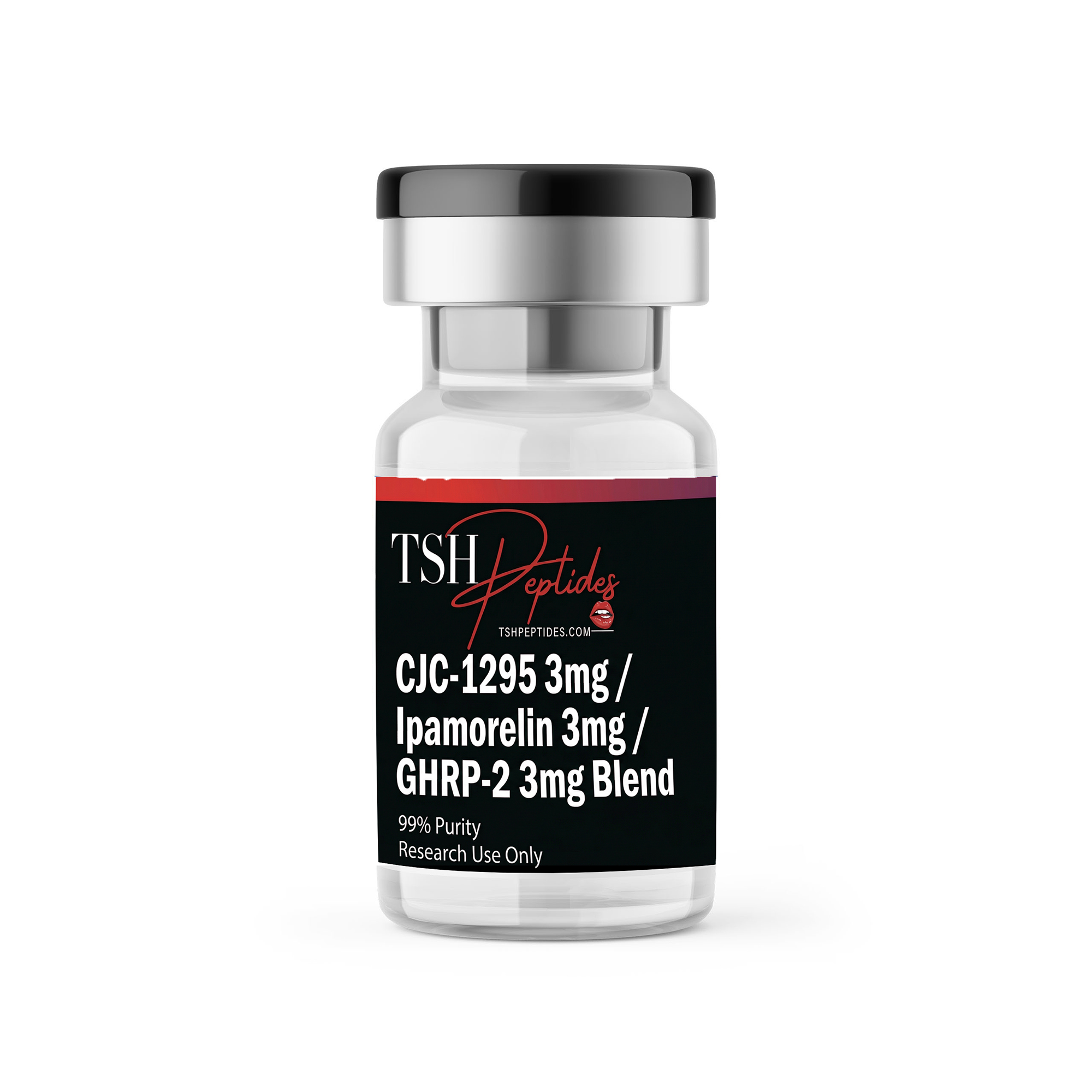
CJC-1295 3 mg / Ipamorelin 3 mg / GHRP-2 3 mg Blend
Researchers found that the body may adjust hormone release in response to physiological demands because growth hormone (GH) production is controlled by several overlapping signals rather than a single on/off switch. A long-acting analog of growth hormone-releasing hormone (GHRH), CJC-1295 stimulates the pituitary to produce more GH over a prolonged period of time. Growth hormone-releasing peptides (GHRPs) such as ipamorelin and GHRP-2 stimulate the ghrelin receptor via an alternative signaling pathway, causing more GH pulses without actually delivering the hormone. These peptides, which have different structures and functions, interact with ghrelin-mediated and GHRH-mediated pathways to produce a more physiological pattern of GH release. This combination is being researched as a means of enhancing endogenous GH signaling while maintaining the body’s own regulatory feedback mechanisms (Teichman et al., 2006; Veldhuis et al., 2008).
References
Teichman, S. L., et al. (2006). Pharmacokinetics and pharmacodynamics of CJC-1295. Journal of Clinical Endocrinology & Metabolism.
Veldhuis, J. D., et al. (2008). Dual control of growth hormone secretion. Endocrine Reviews.